Vastu & Astrology
Vastu Architect & Astrologer Yogiraj Sri
The Role of Astrology in Vastu Shastra
Vastu Shastra focuses on creating harmony between people, buildings, nature, and the energies associated with different directions. Astrology can complement this approach by offering an individual perspective based on a person’s birth chart.
In astrology, the positions of the planets at the time of birth are traditionally studied to understand individual tendencies, strengths, challenges, and important areas of life. When these insights are considered alongside Vastu principles, the design of a home can be approached in a more personalized way.
CONNECTING THE BIRTH CHART WITH THE HOME
Every home has its own spatial character, with different directions, rooms, entrances, and activity areas serving different purposes. Vastu Shastra associates these spaces with particular energies, elements, and traditional planetary influences.
Astrological assessment can provide an additional layer of understanding when planning or evaluating a property. For example, the requirements of a homeowner may be considered together with the orientation, room placement, entrance, and functional use of different areas within the home.
This personalized approach can be applied to important spaces such as bedrooms, study areas, home offices, kitchens, living rooms, and other parts of the property. Rather than following identical recommendations for every household, the objective is to consider the individual, the property, and the intended use of each space together.
WHY COMBINE ASTROLOGY AND VASTU?
Vastu provides principles for organizing the physical environment, while astrology offers a traditional framework for understanding individual planetary influences. Considering both can provide a broader perspective when making decisions about a home.
From a traditional Vastu perspective, an imbalance associated with a particular direction or area may be considered alongside the homeowner’s astrological chart. This may help identify areas that deserve additional attention and guide the selection of appropriate Vastu-based measures.
The purpose is not simply to make a home aesthetically pleasing, but to create a living environment that feels balanced, comfortable, and personally supportive.
A PERSONALIZED APPROACH TO VASTU
No two homeowners, families, or properties are exactly alike. For this reason, combining Vastu analysis with an individual astrological assessment can provide a more personalized approach to residential planning.
The home can be viewed as an extension of the people who occupy it—its orientation, spaces, proportions, and functions working together with the individual’s traditional astrological profile. This integrated perspective can help create a home that is thoughtfully planned for the owner’s lifestyle, aspirations, and overall wellbeing.
Toronto Vastu Consultant Online
Vastu Architect & Astrologer Yogiraj Sri
Five Elements (Panch Mahabhutas) and the Zodiac Signs
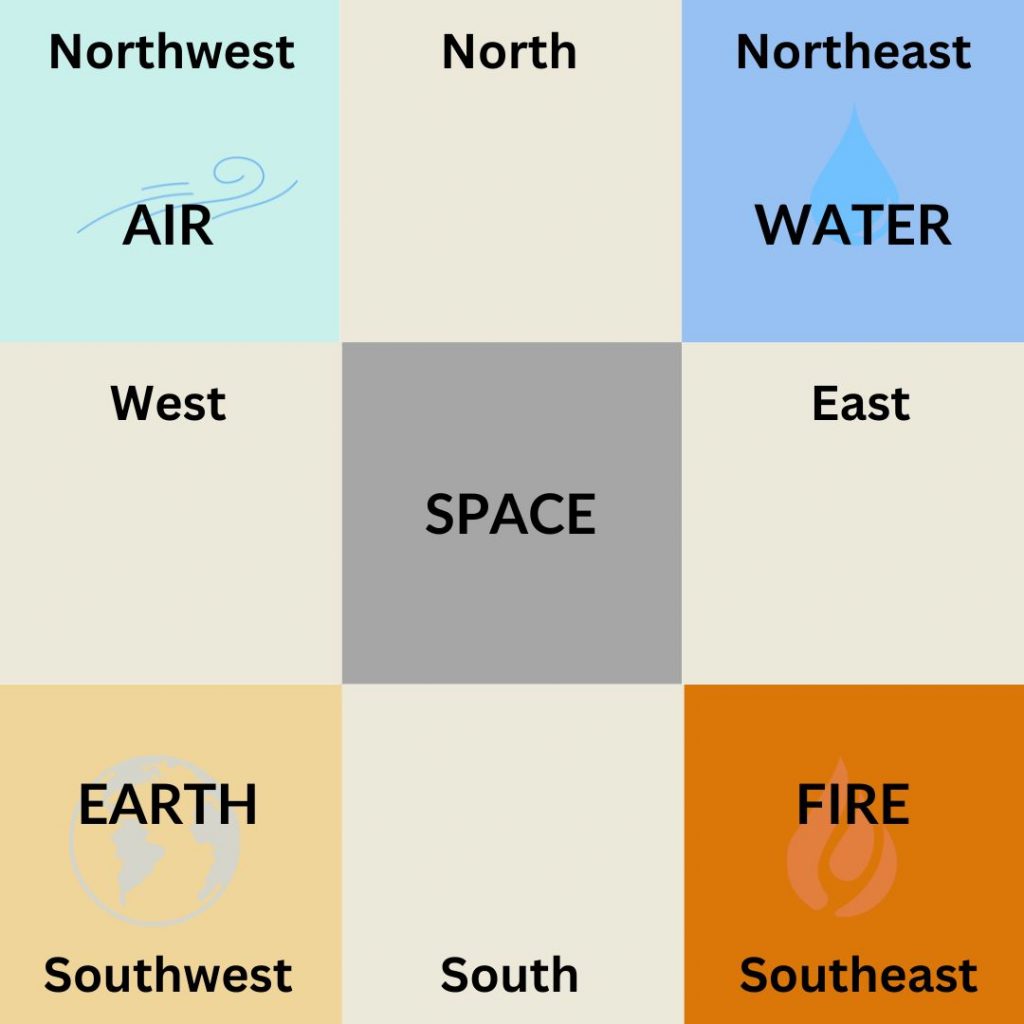
In Vedic traditions, the Panch Mahabhutas, or five great elements, are considered fundamental principles underlying nature, the human body, and the built environment. These elements are Agni (Fire), Prithvi (Earth), Vayu (Air), Jal (Water), and Akasha (Space or Ether).
Vedic astrology traditionally connects the twelve zodiac signs, or Rashis, with four primary elements—Fire, Earth, Air, and Water. Akasha, the fifth element, is regarded as a subtle and pervasive principle present throughout creation.
ZODIAC SIGNS AND THEIR ELEMENTAL NATURE
According to traditional Vedic astrological classifications, the twelve Rashis can be grouped according to their dominant elemental qualities:
Zodiac Signs (Rashi) | Element (Tatva) |
Aries, Leo, Sagittarius | Agni Tatva – Fire |
Taurus, Virgo, Capricorn | Prithvi Tatva – Earth |
Gemini, Libra, Aquarius | Vayu Tatva – Air |
Cancer, Scorpio, Pisces | Jal Tatva – Water |
This elemental classification is traditionally used to understand the qualities associated with an individual’s birth chart.
CONNECTING ASTROLOGY WITH VASTU
Astrology and Vastu can be considered together when developing a personalized approach to a home. A person’s birth chart may traditionally be examined to understand favorable and less favorable planetary and elemental influences. Vastu principles can then be applied to the property’s orientation, rooms, activities, and directional zones.
For example, the North-East is traditionally associated with water and a sense of openness and clarity. Placing functions associated with excessive heat or fire in this area may be considered undesirable within certain Vastu traditions. Similarly, the appropriate placement of kitchens and other fire-related activities is traditionally given particular importance.
CREATING ELEMENTAL HARMONY
Vastu Shastra also works with the concept of the five elements and their relationship with different areas of a building. Traditionally, particular directions are associated with specific elemental qualities. For example, Fire is strongly associated with the South-East, while Water is traditionally connected with the North-East.
Understanding these relationships can help in planning the placement and function of important spaces within a home. The objective is to create an environment where the elemental qualities are appropriately expressed rather than unnecessarily conflicting with one another.
The purpose of combining Panch Mahabhutas, astrology, and Vastu Shastra is to develop a more individualized approach to the built environment. Instead of treating every property in exactly the same way, the homeowner, birth chart, site orientation, spatial arrangement, and intended use of each area can be considered together.
When thoughtfully integrated, these traditional principles can provide a meaningful framework for designing spaces that feel balanced, harmonious, comfortable, and connected with their natural surroundings.
Vastu Architect & Astrologer Yogiraj Sri
Directions, Planets and Vastu Shastra
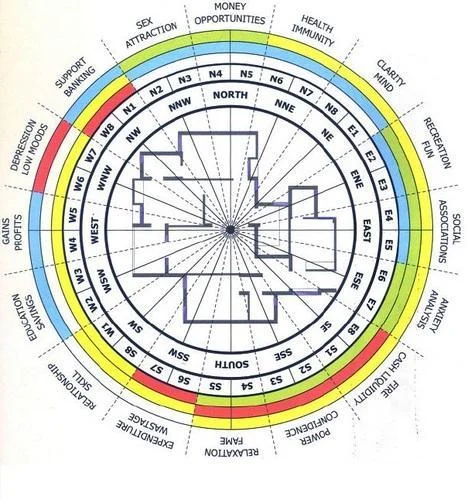
In traditional Vastu Shastra, the eight directions and the central Brahma Sthana are understood as important parts of a building’s energy framework. Vedic astrology is sometimes integrated with Vastu by associating these directions with particular planets, relationships, qualities, and areas of life.
This approach allows a Vastu assessment to consider not only the physical arrangement of a property, but also the traditional planetary symbolism connected with its different zones.
DIRECTIONAL RULERSHIP BY PLANETS
Each of the eight main directions is governed by specific planetary energies (Navagrahas) and presiding deities:
- East: Sun (Lord: Indra)
- North-East: Jupiter (Lord: Shiva / Ishan)
- North: Mercury (Lord: Kuber)
- North-West: Moon (Lord: Vayu)
- West: Saturn (Lord: Varuna)
- South-West: Rahu & Ketu (Lord: Nairuti / Center)
- South: Mars (Lord: Yama)
- South-East: Venus (Lord: Agni)
UNDERSTANDING DIRECTIONS THROUGH VASTU AND ASTROLOGY
In an integrated Vastu approach, the direction of a room, entrance, kitchen, bedroom, toilet, Puja/Prayer space, or other important function may be studied together with its traditional planetary association. The objective is to create a thoughtful relationship between the property’s physical arrangement and the homeowner’s individual requirements.
For example, the East is traditionally connected with the Sun and qualities such as vitality, illumination, confidence, and leadership. From an architectural perspective, an east-oriented space can also benefit from access to morning daylight when the site and climate permit.
Similarly, the North-East (Ishan) is traditionally regarded as an important and sensitive zone. It is commonly associated with spirituality, knowledge, clarity, and openness. Vastu practitioners may therefore recommend keeping this area relatively light, clean, open, and appropriately used.
The South-East (Agneya) is traditionally associated with the Fire element and is commonly considered suitable for fire-related activities such as cooking. The South-West (Nairutya) is generally treated as a more grounded zone and is often considered suitable for spaces requiring stability and permanence.
THE ROLE OF NATURAL LIGHT IN ARCHITECTURE
Some traditional Vastu recommendations also have practical architectural considerations. The movement of sunlight, for example, is an important factor in building orientation, daylighting, thermal comfort, and indoor environmental quality.
The Sun is Earth’s primary natural source of light and energy. Appropriate exposure to natural daylight can contribute to visual comfort and may support healthy daily rhythms and overall wellbeing. Therefore, considering daylight during architectural planning can provide benefits independent of traditional astrological interpretations.
For an east-facing property, architects can study the site’s climate, surrounding buildings, window placement, shading, and orientation to make effective use of morning sunlight while controlling glare and unwanted heat.
VASTU AND THE CENTRAL BRAHMA STHANA (POSITION)
The Brahma Sthana, located at the central area of the Vastu framework, is traditionally regarded as the core of a building. It represents central balance and integration and is often recommended to remain relatively open and free from excessive structural or functional obstruction where the building design permits.
Modern architectural planning can interpret this principle through concepts such as spatial openness, circulation, daylight penetration, ventilation, and visual connection between different areas of a building.
AN INTEGRATED APPROACH TO VASTU DESIGN
Combining traditional Vastu concepts with astrological symbolism and contemporary architectural principles can provide a broader framework for evaluating a property. However, planetary associations and their predicted effects on health, relationships, finances, or other life events belong to traditional Vedic systems and should not be presented as scientifically established causal relationships.
A thoughtful design approach considers the site, orientation, climate, daylight, ventilation, structure, functionality, lifestyle, and Vastu principles together. When astrology is also part of the homeowner’s preferences, it can be incorporated as an additional traditional layer of personalization.
Ancient architectural and Vastu literature, including texts traditionally associated with Vishwakarma Prakash, provides a historical foundation for studying directions, spatial organization, and their symbolic relationships within Indian architectural traditions.
Vastu Architect & Astrologer Yogiraj Sri
Selecting the Right Facing for Your Home
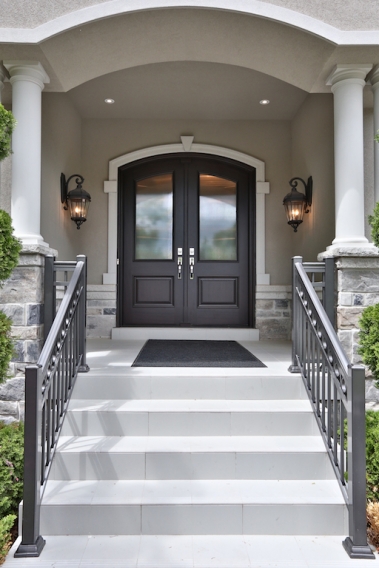
Choosing the orientation of a home is an important decision in Vastu Shastra. Rather than assuming that one direction is universally suitable for everyone, a personalized approach considers the property, its surroundings, the homeowner’s requirements, and, where desired, the individual’s astrological profile.
CONNECTING HOUSE ORIENTATION WITH ASTROLOGY
Traditional Vastu associates each direction with particular qualities, elements, and planetary influences. Astrology can be considered alongside these principles to identify directions that are traditionally regarded as more supportive for an individual.
By studying the birth chart, Yogiraj Sri examine the strength and significance of different planets before recommending a suitable orientation. This creates an individualized approach rather than applying the same directional recommendation to every homeowner.
IS AN EAST FACING HOME ALWAYS THE BEST CHOICE?
East is often considered favorable in Vastu because it is traditionally associated with the Sun, representing vitality, illumination, confidence, authority, and recognition. However, an east-facing property should not automatically be considered the ideal choice for every person.
From an astrological perspective, the condition and significance of the Sun in an individual’s birth chart may be considered when evaluating whether an east-oriented home is personally appropriate. Vastu analysis should also consider practical factors such as site orientation, road access, climate, daylight, ventilation, surrounding buildings, and the internal arrangement of spaces.
CONSIDERING OTHER DIRECTIONS
Other orientations can also be appropriate depending on the property and the homeowner’s requirements. For example, the West is traditionally associated with Saturn, which represents qualities such as discipline, patience, responsibility, stability, and perseverance.
If Saturn has a significant or favorable role in an individual’s astrological assessment, a west-facing property may be explored as one possible option. However, the direction alone should not determine the suitability of a home.
A PERSONALIZED APPROACH TO HOUSE ORIENTATION
Selecting the facing of a house is best approached as a combination of Vastu principles, architectural planning, site conditions, and personal requirements. Astrology may be incorporated as an additional traditional layer when the homeowner wishes to personalize the Vastu assessment.
The objective is not simply to select a particular direction because it is commonly considered auspicious. Instead, the aim is to understand how the orientation, entrance, room arrangement, natural elements, and surrounding environment work together.
A well-planned home should ultimately provide functional comfort, appropriate daylight and ventilation, privacy, efficient circulation, and a sense of harmony. When traditional Vastu and astrological considerations are incorporated thoughtfully, they can become part of a more personalized design approach for the homeowner.
Vastu Architect & Astrologer Yogiraj Sri
Color Selection in Vastu and Astrology
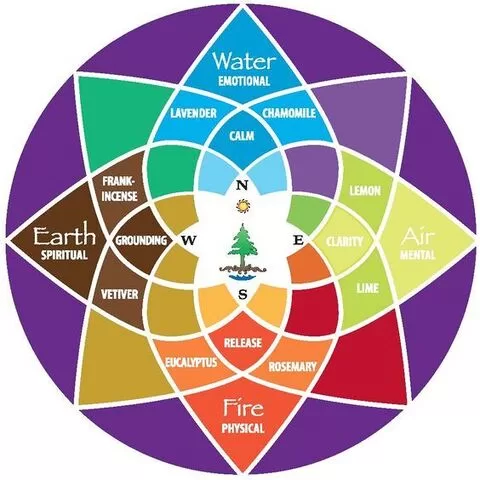
Color plays an important role in the character and atmosphere of a home. Beyond aesthetics, traditional Vastu and astrology associate different colors with particular directions, planets, elements, and qualities. When thoughtfully selected, a home’s color palette can support the intended mood and character of each space.
In an integrated Vastu approach, color selection may be considered along with the direction of a room, its purpose and the five elements. This creates an opportunity to personalize interiors rather than using the same colors throughout every home.
TRADITIONAL PLANETARY COLOR ASSOCIATIONS
Vedic astrology traditionally connects particular colors with the nine planetary influences, or Navagrahas. These associations can be used as a reference when selecting colors for different areas of a home.
Planet | Traditional Color Associations |
Sun (Surya) | Red, Gold, Warm Orange |
Moon (Chandra) | White, Silver, Cream |
Mars (Mangal) | Red, Orange, Coral |
Mercury (Budha) | Green, Leaf Green |
Jupiter (Guru) | Yellow, Mustard, Golden |
Venus (Shukra) | White, Pink, Soft Pastels |
Saturn (Shani) | Dark Blue, Indigo, Charcoal |
Rahu | Smoky Grey, Brown, Muted Tones |
Ketu | Ash Grey, Earthy, Neutral Shades |
These are traditional associations rather than universal rules. Color selection should also consider the room’s function, natural lighting, proportions, materials, and the homeowner’s personal preferences.
USING COLOR ACCORDING TO DIRECTION
Yogiraj Sri may also consider the direction of a room when recommending colors. For example, the South-East, traditionally connected with the Fire element, may be complemented by carefully selected warm tones when appropriate for the space.
However, using a strong color simply because it is traditionally associated with a particular direction may not always produce a comfortable interior. The intensity, amount, lighting conditions, and surrounding colors should also be considered.
For bedrooms, softer and more restful shades may be preferable to highly stimulating colors. Kitchens may accommodate warmer or brighter accents, while living spaces can benefit from balanced tones that complement daylight and furnishings.
THE ROLE OF COLOR IN HUMAN EXPERIENCE
Color also has an important place in contemporary interior design. Different colors can influence how people perceive temperature, spaciousness, energy, calmness, and visual comfort. Bright or warm colors may feel more stimulating, while softer and cooler shades can create a quieter atmosphere.
These psychological responses can vary between individuals and cultures, so color should be selected with the intended users and purpose of the space in mind.
COMBINING VASTU, ASTROLOGY AND INTERIOR DEISGN
A personalized color strategy can bring together several considerations: the direction of the room, its function, natural light, the five elements, traditional planetary associations, and the homeowner’s individual preferences.
For example, when selecting colors for a bedroom or kitchen, an integrated assessment can consider both the traditional Vastu recommendations and the practical requirements of the space. This allows color to become part of the overall design rather than being treated as an isolated Vastu remedy. The goal is to create interiors that are visually pleasing, comfortable, functional, and harmonious with the character of the home
Vastu Architect & Astrologer Yogiraj Sri
Muhurat (Auspicious Timing) in Vastu and Astrology
In Vedic traditions, Muhurat refers to selecting a favorable period for beginning an important activity. In the context of architecture and Vastu Shastra, auspicious timing may be considered for significant milestones such as starting construction, performing Bhumi Pooja, installing the main entrance frame, beginning renovation, or entering a newly completed home.
The traditional belief is that the time at which an important activity begins can influence its overall journey. Astrology is therefore used to examine factors such as the lunar day (Tithi), Nakshatra, planetary positions, and other elements of the traditional calendar before selecting an appropriate Muhurat.
WHY TIMING MATTERS IN VASTU
Vastu Shastra traditionally considers both how a building is designed and when important stages of its creation begin. A carefully planned structure may therefore be complemented by selecting traditionally favorable timings for key construction and occupancy events.
For example, Bhumi Pooja is traditionally performed before major excavation or construction begins, while Griha Pravesh marks the ceremonial entry into a completed home. The installation of the main entrance framework is also considered an important milestone in traditional Vastu practice.
TITHI AND NAKSHATRA
The Hindu lunar calendar provides several factors that are traditionally examined when selecting a Muhurat. Tithi, or the lunar day, is one such consideration. Different Tithis are traditionally regarded as more or less suitable for particular activities.
Nakshatras, or lunar constellations, are another important consideration. Nakshatras such as Rohini, Pushya, and Uttara Phalguni are traditionally regarded as favorable for certain construction, property, and house-entry activities, depending on the complete astrological assessment.
The suitability of a particular Muhurat should not be determined by a Nakshatra or Tithi alone. A traditional Jyotish assessment may also consider the individual’s birth chart, planetary periods, weekday, lunar position, and the specific purpose for which the Muhurat is being selected.
MUHURAT AND THE VASTU PURUSHA MANDLA
The relationship between astrology and Vastu becomes particularly interesting when considering the Vastu Purusha Mandala. Traditional Vastu literature associates different portions of the Mandala with specific deities and functions, while Jyotish literature provides an elaborate system of planetary and lunar symbolism.
These traditions developed over centuries and provide a cultural and philosophical framework for understanding the relationship between time, space, nature, and human activity.
THE NATURAL RHYTHM OF TIME
Natural cycles have always played an important role in traditional Indian systems. The movement of the Sun and Moon provides the foundation for calendars, seasons, tides, and many observable natural rhythms. For example, the Moon’s gravitational influence on ocean tides is scientifically established.
SELECTING A MUHURAT FOR A PROPERTY
For a new home, office, factory, commercial building, or renovation project, Muhurat can be incorporated as an additional traditional consideration alongside sound architectural planning.
A well-selected Muhurat may be considered for important milestones such as:
- Bhumi Pooja and beginning of excavation
- Commencement of construction
- Installation of the main entrance
- Major renovation or structural work
- Installation of important architectural features
- Griha Pravesh or first entry into the completed property
The purpose of Muhurat is to bring together time, intention, and action according to traditional Vedic principles. When combined with practical construction planning, appropriate site selection, sound engineering, and thoughtful Vastu design, it can form a meaningful part of a personalized approach to creating a new space.
The selection of an auspicious Muhurat is a traditional Vedic practice. Specific dates and timings should be determined according to the property, location, activity, and individual astrological considerations rather than relying on a general calendar alone.